The Significance of Eucharistic Miracles
Eucharistic miracles have long been a source of fascination and inspiration within the Catholic faith. These extraordinary events, which are believed to demonstrate the real presence of Christ in the Eucharist, often reinforce the beliefs and practices of millions. In this blog post, we will explore some notable Eucharistic miracles, their significance in Catholic teachings, and their impact on the faithful.
Understanding Eucharistic Miracles
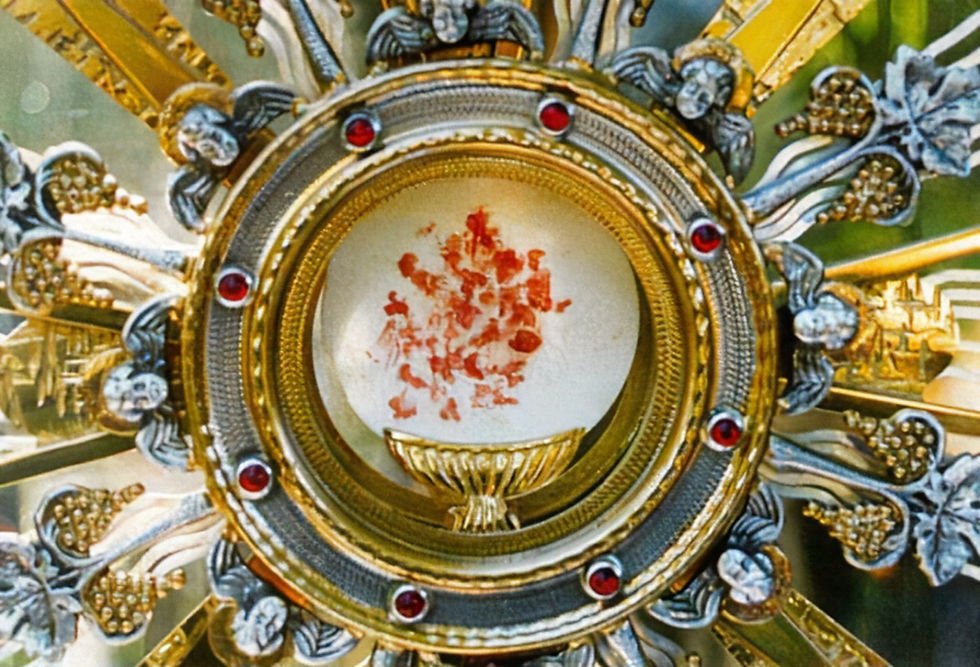
Eucharistic miracles are typically defined as events in which the elements of bread and wine are said to transform into the actual body and blood of Christ, visibly demonstrating this transformation through phenomena such as bleeding, physical transformations, or even preservation of the elements over time. These miracles are perceived as divine interventions, reaffirming the doctrine of transubstantiation—that during the Mass, while the appearances of bread and wine remain, their essence is transformed into Christ's body and blood.
Notable Eucharistic Miracles
The Miracle of Lanciano (8th Century, Italy)
One of the oldest and most well-documented Eucharistic miracles occurred in Lanciano, Italy. According to accounts, a priest who doubted the true presence of Christ in the Eucharist witnessed the consecrated host turn into real flesh and the wine into actual blood during Mass. Modern scientific analyses conducted in the 1970s determined that the flesh is heart tissue from a human being, and the blood matches the group AB type, aligning with traditional interpretations of the miracle.
The Miracle of Bolsena (1263, Italy)
In Bolsena, a priest named Peter of Prague experienced profound doubt about the real presence of Christ in the Eucharist. During the Mass, the consecrated host began to bleed, staining the altar cloth. This miracle is notably tied to the establishment of the Feast of Corpus Christi, which honors the Eucharist (Pope, 2007).
The Miracle of Sokolka (21st Century, Poland)
A more recent phenomenon occurred in Sokolka, Poland in 2008, when a consecrated host was found to have transformed into what appeared to be heart tissue after being improperly stored. The local bishop authorized an investigation, and independent testing revealed that the specimen demonstrated characteristics of cardiac tissue, further enhancing the community’s devotion to the Eucharist.
The Miracle of Siena: In 1730
The Miracle of Siena: In 1730, the consecrated hosts were stolen fromthe Church of San Francesco in Siena, Italy. Rather than simply disappearing, the hosts miraculously returned unharmed and intact, even after an extensive period in the possession of thieves.
The Miracle of Buenos Aires (1996, Argentina)
In this more recent case, a consecrated host was found to have turned into a substance resembling flesh. The Archbishop of Buenos Aires, Cardinal Jorge Mario Bergoglio (now Pope Francis), ordered an investigation into the phenomenon. Scientific analysis suggested that the host was cardiac tissue, similar to that found in Lanciano.
Theological Significance
Eucharistic miracles serve as powerful affirmations of Catholic doctrine, not only strengthening the faith of believers but also prompting deeper theological discussions around the sacraments. According to Thomas Aquinas in his work, *Summa Theologica*, the Eucharist is the "greatest sacrament" and is crucial for spiritual nourishment and communion with God (Aquinas, 1947). These miracles remind the faithful of the mystery of faith encapsulated in the Eucharist and provide tangible signs of God's presence in the world.
Impact on the Faithful
For many, Eucharistic miracles strengthen belief, providing a personal encounter with the divine. These events often catalyze renewed commitment to the faith, inviting believers to engage more deeply with the sacrifice of the Mass. As seen in the collective enthusiasm for public celebrations and pilgrimages to the sites of these miracles, they serve to unify and inspire communities).
The Catholic Church, through its own investigations, emphasizes the importance of theological implications over scientific validation. As Cardinal Joseph Ratzinger (later Pope Benedict XVI) stated, “The miracle has to remain an enclosure of faith” (Ratzinger, 2004). This perspective underlines the notion that, while science can examine elements of the physical world, faith provides the ultimate lens through which believers understand and experience these miracles.
Eucharistic miracles are compelling landmarks within the Catholic tradition that invite reflection on the mystery of faith. By examining these significant events, we appreciate both their historical context and contemporary relevance. As the Church continues to explore the depths of sacramental theology, these miracles serve as reminders that the sacred remains intertwined with the ordinary, urging the faithful toward a deeper relationship with Christ through the Eucharist.
References
Aquinas, T. (1947). *Summa Theologica*. New York, NY: Benziger Brothers.
Pope, Benedict XVI. The Spirit of the Liturgy (2007). Ignatius Press.
Holy Bible, English Standard Version. (2001). Crossway Bibles.
About the Author:
Louisa Mastromarino is a certified counselor educator. She holds a Bachelor of Arts Degree in Communications, a Master of Science Degree in School Counseling, and a post master’s degree in Supervision and Educational Leadership. Louisa is the author of Spifford Max and the Cycle Pups Go to Washington, D.C., and additional publications. Louisa's work has been highlighted in the noted publications Careers from the Kitchen Table by Raven Blair Davis and Miracles in the Divine by Beverly Pokorski. For appointments in life coaching email distantholistic@gmail.com. Thank you.
The information provided on this blog is for informational purposes only and does not constitute legal or professional counseling advice. We assume no liability for any information, errors or omissions.


Comments